When I am moving through unfamiliar terrain, I don't want navigation to become a separate task.
I want to check the map, confirm my direction, make a decision, and keep moving. After hours on the trail or in the field, even small interruptions can affect my rhythm. That is why I tend to prefer navigation equipment that is simple to understand, quick to use, and easy to keep within reach.
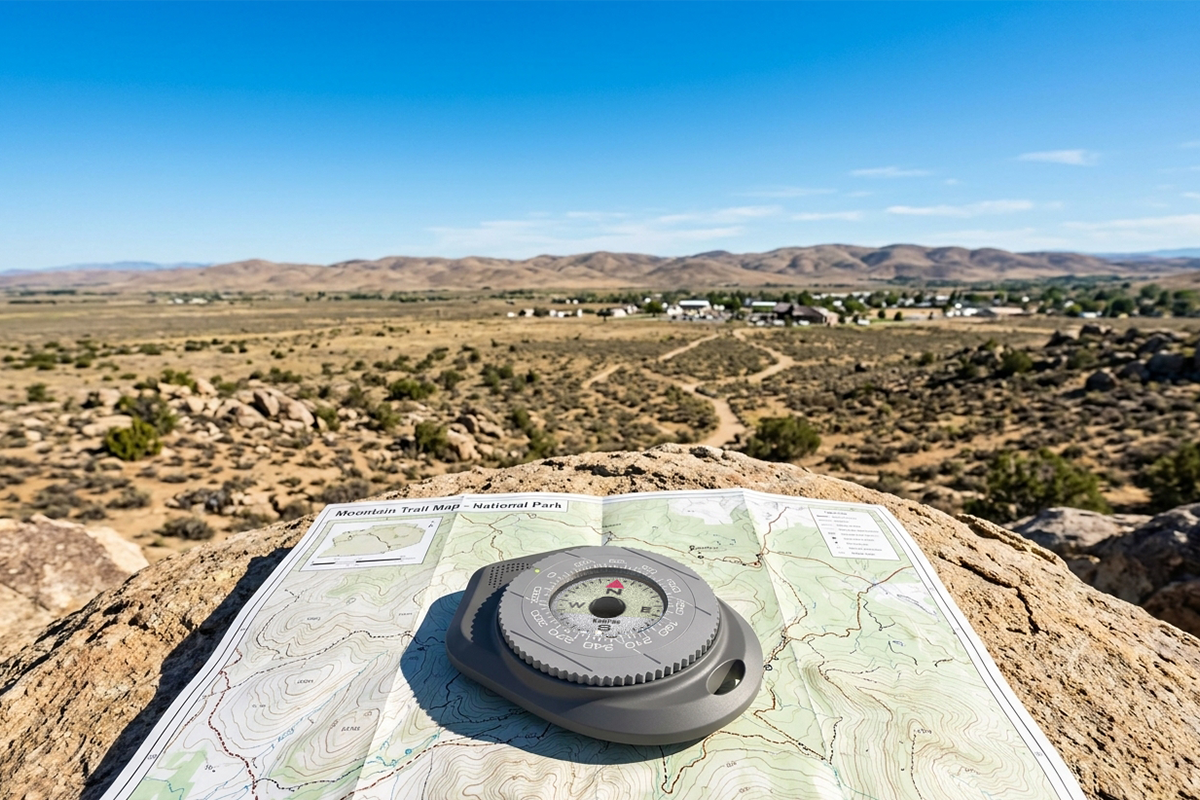
The KanPas Ranger-18 follows that idea. Its compact form, tactile controls, clear navigation references, and low weight make it the kind of compass I can carry without thinking about it until I actually need it.
Navigation Should Keep Up With You
When navigating outdoors, I don't always need to take a long bearing or stop for a detailed compass check. Sometimes I simply need to confirm that I am still heading in the right direction.
That can happen while following a trail, moving between landmarks, crossing open ground, or changing direction after a route decision. The important thing is being able to make that check quickly and return my attention to the terrain ahead.
For me, a useful compass is one that supports that rhythm rather than interrupting it. The Ranger-18 keeps the basic navigation process straightforward: set the direction, align the references, check the heading, and move.
A Bezel I Can Feel and Hear
One of the things I appreciate when using a compass on the move is being able to adjust it without relying entirely on visual confirmation.
The Ranger-18 uses a 10° click-stop bezel, with a clear mechanical click at each position. I can feel each adjustment through the bezel and hear the clicks as it turns, giving me an immediate sense of how many increments I have moved.
That tactile and audible feedback makes the adjustment more controlled and intuitive. Instead of constantly looking down to check the bezel, I can turn it, count the clicks, and keep more of my attention on the map, terrain, or route ahead.
It is a small detail, but when I am moving quickly or working in low-light conditions, being able to feel and hear each 10° adjustment makes the compass easier to use.
Keeping Direction Clear When the Light Changes
Outdoor navigation doesn't always happen in perfect daylight. Early starts, late finishes, dense forest, changing weather, and fading light can all make small navigation markings harder to see.
The Ranger-18 uses a semi-luminous dial, with the northern half of the dial designed to glow after absorbing light. There is also a luminous point at 0° on the rotating bezel, giving me another quick reference when adjusting the direction.
Together, these details make it easier to pick up the compass and identify the key direction references when daylight starts to fade. And because the luminous system does not require a battery, I can rely on it without adding another electronic device to my gear.
Clear Reference Points Make Direction Checks Faster
When I check a direction, I want the compass to tell me what I need at a glance. I don't want to spend extra time working out which markings to follow.
The Ranger-18 combines a clear direction arrow with high-visibility navigation markings and alignment lines on the bezel. These give me straightforward reference points for setting and checking direction.
For someone who spends a lot of time navigating outdoors, small details like these make a difference. The less I have to think about the tool itself, the more attention I can keep on the map, terrain, and route ahead.
Light Enough to Carry All Day
Weight becomes more noticeable the longer I am outside. A few extra grams may not matter at the beginning of a trip, but they become part of the total load after hours of walking.
At just 10 g and approximately 47 × 34 × 12 mm, the Ranger-18 adds very little to my gear. It is small enough to carry as part of a lightweight navigation setup or keep with everyday outdoor equipment when I want a basic compass close at hand.
It also comes with a cord and split ring, which gives me an easy way to attach it to a zipper pull, backpack, lanyard, or other gear. I don't necessarily have to keep such a small compass buried inside my pack. I can keep it somewhere accessible and grab it quickly when I need a direction check.
For me, that is an important part of practical field equipment. If a tool is small enough that I don't mind carrying it, and easy enough to reach when I need it, it is much more likely to become part of my regular gear.
A Useful Reference Beyond Direction
Not every navigation problem is about direction. Sometimes I also need a quick way to estimate or check a small measurement.
The Ranger-18 includes a built-in centimeter scale, giving me a convenient reference without adding another tool to my kit. I wouldn't use it instead of a dedicated ruler for precise work, but for a quick measurement in the field or checking a small distance on a map, it can be useful.
It is the kind of secondary function I appreciate because it doesn't complicate the compass. It simply adds another practical reference to something I am already carrying.
A Compass Designed Around Movement
After spending enough time outdoors, I have learned that useful equipment doesn't necessarily need to be complicated. What matters is whether I can understand it quickly, operate it naturally, and carry it without thinking about the extra weight.
The Ranger-18 brings those ideas together in a compact design inspired by the clean lines of a small exploration spacecraft. The modern geometry gives it a distinctive character, while the actual design remains focused on practical navigation: a tactile 10° bezel, clear direction references, a semi-luminous dial, and a 10 g lightweight body.
For me, that is what makes a compass useful on an adventure. I can make a quick adjustment, feel and hear the bezel click into position, confirm my direction, check the terrain ahead, and keep moving.
Because good navigation is not about stopping to think about the compass.
It is about using the compass to keep moving in the right direction.
KanPas Ranger 18 — made to explore.
click to get : https://www.kanpas.com/products/kanpas-tactical-edc-compass-inspired-by-space-fighter-jets-ranger18


